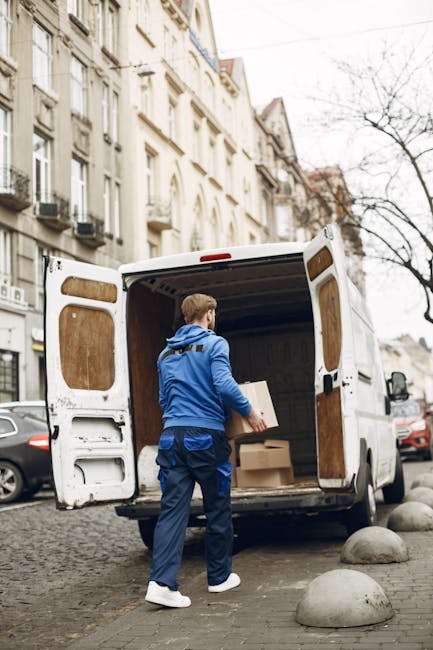
Man with van payload limits in Upton what to know

If you are comparing a man with van service in Upton, payload limits are one of those details that can quietly make or break the whole move. Too much weight in the wrong van, and suddenly a simple job turns into a delay, an awkward repack, or even an unsafe journey. Nobody wants that. This guide explains Man with van payload limits in Upton what to know in plain English, so you can choose the right van, avoid nasty surprises, and book with a bit more confidence.
Whether you are moving a flat, collecting furniture, shifting boxes for a business, or dealing with a last-minute local job, the same core question applies: how much can the van legally and safely carry? Let's get into the practical side of it, without the fluff.
Why Man with van payload limits in Upton what to know Matters
Payload is the amount a van can legally carry in addition to its own weight, driver, and passengers. In other words, it is not just about whether everything fits inside. It is about whether the vehicle can safely and legally handle the load on the road. That matters anywhere, but in Upton it can matter even more because local streets, parking pressure, and tight loading spaces often make every extra trip harder than it needs to be.
Think about a typical moving day. You have the sofa, a mattress, a few boxes of books, maybe a chest of drawers, and a mirror you really would rather not scratch. If the payload is underestimated, the driver may have to split the load into two runs, leave items behind temporarily, or swap vans at the last minute. Bit of a headache, really. And if the van is overloaded, the risks go up fast: braking distances change, tyres work harder, handling suffers, and compliance becomes a problem.
There is also a customer-expectation side to this. A reputable operator will ask what you are moving, how many stairs there are, whether access is tight, and whether any items are unusually heavy. If they do not, that is a small warning sign. In our experience, the best local moves are the ones where the payload was checked early, not guessed at after the van arrives.
For local house moves, a service like house removals or a more flexible man with van option can work well, but only if the vehicle size is matched to the job. That matching is the whole game here.
How Man with van payload limits in Upton what to know Works
The easiest way to understand payload is to split a van's capacity into three parts: the empty vehicle weight, the people in the cab, and the goods you are moving. The payload is what remains for the cargo after the vehicle's own weight is accounted for. Sounds simple, but the practical side can get messy quickly.
Manufacturers usually specify a maximum payload for each van model. A small transit-style van might suit a few boxes and lighter furniture. A larger van may be better for a full one-bedroom flat or a bulky load with awkward items. But there is always a catch: the theoretical payload is not the same as the real-world payload once you add driver weight, fuel, packing materials, blankets, trolleys, straps, and any extra equipment. It all adds up. Quietly, too.
That is why a good mover will not just ask "How much stuff do you have?" They will ask "What kind of stuff is it?" A bag of cushions takes up little weight. A stack of books does not. A wardrobe may be light enough to lift but large enough to eat up the cargo area in an awkward way. This is where space and weight start arguing with each other.
In Upton, payload planning often sits alongside access planning. A van that is big enough on paper might still be a poor choice if it cannot park close enough to load safely. That is why local knowledge matters. For example, some moves benefit more from a slightly smaller van with a realistic payload than from a larger van that struggles with street access. If you want a broader understanding of vehicle size choices, the page on moving van options is a useful starting point.
One more thing: payload is not only about avoiding fines. It is also about protecting your belongings. Overloading can increase movement inside the van, and that can lead to damage if items are not restrained properly. So yes, weight matters. But so does how the load is arranged.
Key Benefits and Practical Advantages
Getting the payload right is not glamorous, but it saves time, stress, and a fair bit of money in the long run. Here are the main advantages.
- Fewer trips: The right payload means more of your belongings can move in one go, which is usually faster and easier.
- Safer transport: A properly loaded van handles better, especially when braking or turning through narrower roads.
- Less risk of damage: When items are packed within sensible weight limits, they are less likely to shift or crush each other.
- Better pricing clarity: If the van size and payload are matched to your load from the start, quotes tend to be more accurate.
- More reliable timings: Nobody wants a moving crew standing around reworking the plan because the van is too small. It happens more than people think.
There is also a psychological benefit. A lot of moving anxiety comes from uncertainty. Once you know the payload is realistic, the job feels manageable. You can picture the boxes in the van, the route out of Upton, the lift back in at the other end, and the whole thing becomes less mysterious. That counts for something.
If you are budgeting for a move, the pricing page on pricing and quotes can help you see how different job sizes are usually handled. For many readers, payload is the detail that turns a rough estimate into a sensible quote.
Who This Is For and When It Makes Sense
This topic matters to more people than you might expect. If you are only moving a few things, you may assume any van will do. But once you add stairs, awkward furniture, or a few heavy boxes, the payload conversation becomes very real.
It is especially useful if you are:
- moving a studio flat or one-bedroom property
- collecting bulky furniture from a seller or shop
- moving office equipment, filing, or boxed stock
- shifting items between storage and home
- helping family members move without hiring a full removals crew
- dealing with a same-day or urgent move where there is less room for error
For household moves, home moves and man and van removals can be a very practical middle ground. You get more flexibility than a big removals operation, but more support than trying to hire a van and do everything yourself. Truth be told, that middle ground is often where most local moves live.
If your load includes single large pieces like a sofa, bed frame, or heavy cabinet, payload still matters even if the total number of items seems small. A van can look half-empty and still be close to its legal weight limit. That is the trap people fall into.
Step-by-Step Guidance
Here is a simple way to handle payload planning without getting lost in technical jargon.
- List what you are moving. Include boxes, furniture, appliances, tools, and any awkward or fragile items.
- Estimate the heavy pieces first. Books, white goods, and solid wood furniture usually weigh more than people expect.
- Check access details. Stairs, distance from front door to van, parking restrictions, and lift availability all affect the job.
- Ask what the van can legally carry. A decent operator should be able to explain the payload in simple terms.
- Include extras. Blankets, straps, trolleys, and packing materials all take a little space and weight.
- Allow a margin. It is wiser to leave some capacity unused than to squeeze everything in and hope for the best.
- Confirm the load plan before move day. A quick check the day before can prevent surprises in the morning.
If you are moving furniture only, the furniture pick up service information may be helpful. For jobs with mixed items, it is better to over-communicate than under-communicate. The crew can only plan properly if they know what they are collecting.
A practical tip: group items by weight and fragility, not just by room. A box of books in the hallway is a very different beast from a box of cushions in the bedroom. Small detail, big difference.
Expert Tips for Better Results
After enough local moves, a pattern emerges. The smoothest jobs are usually the ones where the customer and mover have been honest about the awkward bits from the start. Sounds obvious, but honestly, people often forget the awkward bits until the van is outside.
1. Treat bulky items as weight and space problems
A wardrobe may not be the heaviest thing in the world, but it can force the load into a less stable layout. That changes the payload conversation because the usable space shrinks once you factor in protection and safe stacking.
2. Keep a running list of "hidden weight"
Books, kitchenware, toolboxes, and gym equipment are classic hidden offenders. A few of these items can tip a job from "standard" to "needs a larger van".
3. Use lighter items to fill voids
Soft bedding, cushions, and clothing can help fill gaps around furniture, but do not use them to disguise an overloaded van. That is a quick way to make the job look neat while creating a real problem underneath.
4. Ask about the driver's loading approach
Some operators load by weight first, then shape. Others go room by room. Either can work, but a clear method usually means fewer arguments with gravity. Which, to be fair, is a very stubborn opponent.
5. Be realistic about last-minute extras
That spare desk chair in the corner? The small fan you forgot about? The pile of boxes in the airing cupboard? They all count. If you know you are prone to "oh, and one more thing..." moments, build that into the plan.
Common Mistakes to Avoid
Most payload problems come from a few predictable mistakes. Avoid these and you are already ahead of the game.
- Assuming a bigger van is always better. Bigger can help, but only if the payload and access suit the job.
- Forgetting driver and equipment weight. The payload is not just your items; the vehicle still has to carry people, fuel, and gear.
- Underestimating heavy small items. Books, tools, and kitchenware often create the biggest headaches.
- Not mentioning awkward access. Narrow roads, limited parking, and long carries can affect van choice more than people realise.
- Leaving the check until move day. By then, options are narrower and stress levels tend to spike.
- Choosing only on price. The cheapest quote is not always the best value if it ends up needing extra trips or a second van.
There is also a softer mistake: not asking questions because you do not want to seem fussy. Ask anyway. A good mover would much rather clarify the payload now than improvise later in the street with everyone watching. No one enjoys that little theatre.
Tools, Resources and Recommendations
You do not need specialist software to plan a move, but a few simple tools make life easier.
- A written inventory: A notes app or paper list is enough, as long as you are thorough.
- Basic measurements: Measure large items and key access points like doors, stair turns, and hallways.
- Weight guidance from item categories: You may not know exact weights, but grouping items by type helps with estimates.
- Packing supplies: Good boxes, tape, labels, blankets, and straps make loading more efficient.
- Service pages for cross-checking: The broader removal services overview and removal van page can help you compare job types and van styles.
If you need a move with extra care, you may also want to look at packing and unpacking services. Better packing usually means better load efficiency. Simple as that.
For business users, commercial moves and office removals often require a different loading mix from domestic jobs. Office items can be lighter than they look, but they can be bulky, delicate, and time-sensitive. Not ideal if the van is the wrong size.
Law, Compliance, Standards and Best Practice
There is no single one-size-fits-all rule for every man with van job, but a few practical standards should be taken seriously. In the UK, vehicles must be loaded safely and within the manufacturer's limits, and operators should not set out with a van that is visibly or knowingly overloaded. That is common-sense road safety as much as anything else.
Best practice usually includes clear weight planning, secure load restraint, sensible stacking, and honest communication about what is being moved. It also includes insurance awareness. If a mover is handling your belongings, you should feel comfortable asking how they protect the load and what happens if something is damaged in transit. That is not awkward. That is sensible.
The pages on insurance and safety and health and safety policy are worth reading if you want to understand the approach behind the service. For many customers, those pages are where trust starts to feel real.
It is also smart to check terms around cancellations, service scope, and payment. Not because every move will go wrong, but because it is easier to deal with the admin before the van arrives at 8:00 on a damp Tuesday morning and everyone is trying to find a parking space.
Options, Methods and Comparison Table
If you are deciding between a few moving setups, the table below gives a straightforward comparison. It is not about one option being universally better. It is about fit.
| Option | Best for | Payload fit | Typical strengths | Watch-outs |
|---|---|---|---|---|
| Small man with van | Few boxes, single items, light flat moves | Lower payload | Flexible, easier in tight streets | Can run out of space or weight quickly |
| Medium van | One-bedroom moves, mixed furniture, local collections | Moderate payload | Balanced size and access | Still needs careful planning for heavy loads |
| Large van | Larger domestic or commercial loads | Higher payload | Fewer trips, more room for packing protection | May be harder to park or manoeuvre |
| Multi-van or removals team | Full house moves, bigger offices, complex access | Highest overall capacity | More manpower, more flexibility | Higher cost and more coordination |
For some readers, the choice is not just about size; it is about service style. If you want a more tailored approach, the pages for man with a van and removal company can help you compare the service feel as well as the load capacity.
Case Study or Real-World Example
Picture a typical Upton afternoon. It is late, traffic is building, and someone is moving out of a first-floor flat with a sofa, a bed frame, six boxes of books, a desk, and a few kitchen appliances. On paper, it sounds straightforward. In reality, the books alone are doing a lot of the heavy lifting. Literally.
The first van offered for the job is compact and would probably have worked if the move were only soft furnishings. But once the heavy boxes are added, the payload margin gets uncomfortably thin. Rather than gamble, the mover recommends a slightly larger van and a better loading order: books and appliances first, furniture protected with blankets, lighter boxes stacked above. The result? One trip, no panic, and no last-minute reshuffle on the pavement.
That is the kind of decision that saves people from a long day. The customer might never think about payload again, which is exactly how it should be. The move just feels smooth. Quietly efficient. No drama. Nice when that happens.
If the job had involved stairs, fragile artwork, or a tighter timetable, the mover might have suggested a different approach again. And that is really the point: payload planning is not a rigid formula. It is judgement, built from experience and the specific shape of the move.
Practical Checklist
Use this checklist before you book. A quick five-minute review can save hours later.
- Have you listed every item that needs moving?
- Do you know which items are the heaviest?
- Have you measured any oversized furniture?
- Have you checked stairs, lifts, doors, and parking access?
- Do you know whether you need packing help?
- Have you allowed for blankets, straps, and moving equipment?
- Have you asked about the van's payload and size?
- Have you confirmed whether one trip is realistic?
- Have you discussed fragile or valuable items separately?
- Do you understand the quote, including any extras?
A useful add-on: if you are moving out of a busy area, read the local advice on parking rules for moving vans in Upton Ward. Payload and parking are different topics, sure, but they often collide on the same street corner.
Conclusion
Man with van payload limits in Upton what to know comes down to one simple idea: the right van is not just the one that looks big enough. It is the one that can safely carry your items, fit the access situation, and complete the move without last-minute stress. If you get the payload right, everything else tends to feel easier. Loading is smoother, timing is better, and the whole day has a calmer shape to it.
For local moves, that calm matters. Upton jobs often involve limited parking, compact streets, or a few awkward items that do not behave quite as neatly as the plan on paper. A thoughtful van choice, plus a clear inventory and honest conversation, is usually all it takes to avoid trouble.
Get a free quote today and see how much you can save.
And if you are still weighing up your options, that is perfectly fine. A good move is usually built on small, sensible decisions made before the van arrives. One careful choice at a time.
Frequently Asked Questions
What does payload mean on a man with van service?
Payload is the amount of weight a van can legally carry in addition to its own weight, driver, passengers, fuel, and equipment. It is the real limit that matters on moving day, not just how much space is left inside.
How do I know if my move will exceed the payload?
If you are moving heavy furniture, lots of books, appliances, or several large boxes, there is a good chance payload will matter. The safest approach is to list the items, flag the heavy ones, and ask the mover which van size fits best.
Is payload more important than van size?
They work together. A van can be large enough in space but still have a lower payload than you expect. For moving, both capacity and access matter, so size alone is not enough.
Do I need a bigger van for one heavy item?
Not always, but often yes if the item is dense or awkward. A single item like a washing machine, solid wood cabinet, or heavy safe can use a surprising amount of payload. Better to check than guess.
Can I just make two trips instead of hiring a bigger van?
Sometimes you can, but it depends on time, access, fuel, and how much lifting is involved. Two trips may be cheaper on paper but can become tiring and less efficient in practice.
Does packing material count towards payload?
Yes, it does, even if it does not count for much individually. Boxes, tape, blankets, straps, and trolleys all add a little weight and take up space, so they should be included in planning.
What happens if a van is overloaded?
Overloading can make the van less stable, harder to brake, and harder to handle. It can also create compliance issues and potentially affect insurance if something goes wrong. That is why careful loading matters so much.
Are office moves different from home moves for payload?
They can be. Office items may be lighter than domestic furniture, but there may be more boxes, electronics, files, and awkward equipment. The mix matters more than the label.
Should I choose the cheapest quote if payload is unclear?
Not necessarily. A low quote that does not match the actual load can turn into delays or extra charges. It is better to compare value, not just price. The right payload is part of that value.
How far in advance should I discuss payload with the mover?
As early as possible. Ideally, mention it when asking for a quote. That gives the mover time to match the van properly and avoid any last-minute reshuffling.
Do I need special help for fragile or valuable items?
Often, yes. Fragile items may need additional packing, better spacing in the van, or a more cautious loading plan. For antiques, artwork, or delicate furniture, extra care is well worth it.
Where can I learn more about Upton-specific moving issues?
Local guidance on parking, access, and route planning can help a lot. Pages such as the Upton moving blog posts on parking, loading, and busy-hour access are useful if you want to prepare properly and avoid easy mistakes.