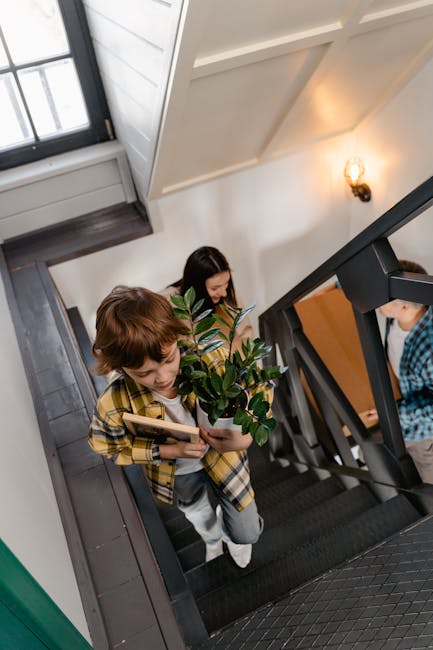
Moving bulky furniture on narrow Upton terraces
Posted on 02/06/2026
Moving bulky furniture on narrow Upton terraces: a practical guide for awkward stairs, tight halls, and real-life moving day
If you have ever stared at a sofa, wardrobe, or mattress and wondered how on earth it is supposed to fit through a narrow terrace hallway, you are not alone. Moving bulky furniture on narrow Upton terraces is one of those jobs that looks simple until you meet the staircase, the turn in the landing, or the front door that only opens so far before hitting the wall. It is a very specific kind of moving headache, and yes, it can be managed with the right planning.
This guide breaks the process down in plain English. You will learn how to measure access properly, prepare furniture, reduce risk, choose the right moving method, and avoid the little mistakes that cause the biggest delays. We will also cover when it makes sense to bring in professional help, because let's face it, some pieces are just too awkward for optimism alone.
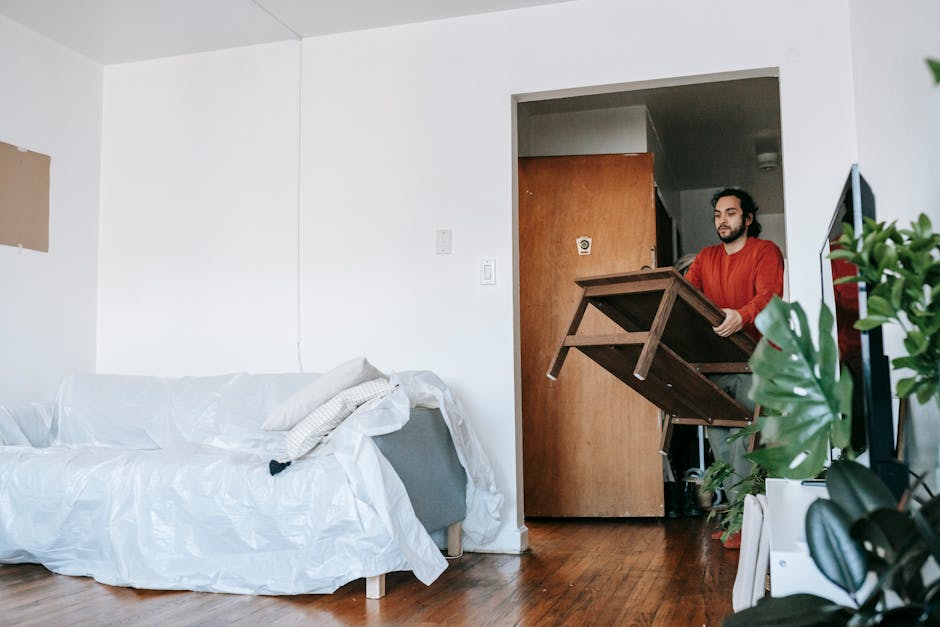
Why Moving bulky furniture on narrow Upton terraces Matters
Terraced homes bring character, charm, and often a bit less space than you would like on moving day. In Upton, as in many UK residential streets, terraces can mean narrow entrances, compact hallways, sharp stairs, tight turns, and front gardens that are more decorative than functional. None of that is a deal-breaker. But it does mean bulky items need a different approach from a standard, straight-in, straight-out removal.
The real issue is not just size. It is shape, weight, balance, and the route the item has to travel. A sofa may be light enough for two people to lift, yet still impossible to swing around a bend without scraping paintwork or twisting someone's back. A wardrobe can look manageable until you realise the landing is too short for a clean pivot. And a dining table? Sometimes the table is easy. The legs, not so much.
That is why planning matters. Proper preparation reduces damage to the furniture, protects walls and banisters, and keeps the day from turning into a slow-motion wrestling match. If you are moving more than one awkward item, the problem compounds quickly. One snag leads to another. A missing measurement, a loose handle, a poor lifting angle. Suddenly the whole move is behind schedule.
There is also a simple emotional point here. Moving home already asks a lot from you. If every item becomes a mini crisis, the day feels twice as long. A sensible moving plan gives you back some control, and on a terrace with tight access that control is worth a lot.
How Moving bulky furniture on narrow Upton terraces Works
The process is straightforward in principle, though a bit fussy in practice. First, you assess the access route. Then you prepare the furniture. After that, you decide whether it can be moved in one piece, partially dismantled, or needs specialist handling. Finally, you carry out the move using safe lifting and careful positioning.
In real terms, that often means starting outside before you start inside. Measure the front path, doorway width, hallway turns, stair width, landing depth, and any awkward corners. If there is a low ceiling, narrow banister, or shallow front step, note that too. You are not just measuring the house. You are measuring the route.
Furniture preparation is the next step. Remove cushions, shelves, loose legs, drawers, or glass components wherever possible. Wrap edges. Secure doors. Tape loose cables. A bulky item becomes much easier when it stops behaving like several smaller ones attached by luck alone.
Then comes the movement method. Some items can be tilted and carried on a dolly or sack truck. Others need two or three people and a very deliberate shuffle. Some need forethought about angle, rotation, and sequencing. That sounds technical, but in practice it is often just about slowing down at the right moments. Rushing is where the bruises happen.
For especially awkward items such as pianos or large sofa beds, it is often worth looking at specialist guidance before you begin. Our article on why pro piano relocation saves time and hassle is a good example of how specialist handling can prevent avoidable damage. Likewise, if your move includes beds or mattresses, bed and mattress move tips can save you a lot of wrestling in the doorway.
Key Benefits and Practical Advantages
There is a reason people often prefer a planned approach over a last-minute lift-and-hope method. A good process gives you practical wins on several fronts.
- Less damage: Proper measurements, wrapping, and route planning reduce scuffs, dents, and cracked corners.
- Lower injury risk: Good lifting habits protect backs, shoulders, knees, and hands.
- Faster load-out: When each item has a route and a plan, you avoid endless repositioning.
- Better furniture survival: Bulky pieces are expensive to replace, so careful handling matters.
- Less stress: A clear plan makes the day feel more manageable, even when the staircase says otherwise.
There is another benefit people sometimes overlook: confidence. Once you know a wardrobe has been measured, wrapped, and pre-checked, you stop second-guessing every step. That calmness helps the whole moving team work better. Strange how that works, but it does.
For many households, it also helps to combine furniture planning with broader move preparation. If you want the wider picture, achieving a smoother house move, packing wisely for a seamless house move, and decluttering before a move all support the same goal: fewer surprises on moving day.
Who This Is For and When It Makes Sense
This topic is especially relevant if you live in a terrace with tight internal access, but it is not only for homeowners. Renters, landlords, student tenants, and small business owners all run into the same access issues when bulky items need to move through compact spaces.
You will likely benefit from this approach if you are moving:
- a sofa, armchair, or corner unit through a narrow hall
- a bed frame, mattress, or divan base up or down stairs
- a wardrobe, chest of drawers, or tall bookcase with limited turning space
- appliances such as a freezer or washing machine that are heavy and awkward
- specialist items that require more than basic lifting confidence
It also makes sense when you are short on help. A two-person lift is often not enough for awkward furniture, and one person with a back strain is not a strategy. If you are doing a solo move, or mostly solo with one helper, you should be especially cautious. Our guide to solo heavy lifting techniques is useful background, though in fairness some items should still not be tackled alone.
For local tenants and small households, the issue is often timing as much as size. If you have a moving window, a narrow terrace, and a van waiting outside, you need the exit route to be clean and predictable. If any part of that chain is weak, the whole day slows down.
Step-by-Step Guidance
Here is a practical way to handle bulky furniture in a narrow terraced property without making it harder than it needs to be.
1. Measure everything, not just the furniture
Measure the item at its widest, tallest, and deepest points. Then measure the route: doorways, hallway bends, stair width, landing length, and ceiling clearance where relevant. Do not guess. A piece that is "probably fine" is often the one that gets stuck.
2. Decide whether dismantling is needed
Some furniture should be taken apart before it moves. Remove legs, shelves, arms, drawer units, or bed frames where possible. Keep all screws and fittings in labelled bags. It sounds basic, but it saves a lot of faff later.
3. Protect the furniture and the property
Use blankets, shrink wrap, furniture covers, corner guards, and door protection where appropriate. On older terraces especially, hallways can have narrow skirting, uneven plaster, and a few battle scars already. You do not want to add your own.
4. Clear the moving path
Move shoes, plant pots, mats, bins, and loose clutter out of the way. Open doors fully if they can stay open safely. If the front step or path is slippery, dry it before carrying anything heavy. A wet shoe on a turn is the sort of thing no one enjoys remembering.
5. Assign roles before lifting
Agree who is leading, who is spotting, and when to stop. One person should call the turns and steps. That little bit of coordination cuts confusion fast. Try not to have three people giving instructions at once. That way lies chaos.
6. Use controlled lifting and pivoting
Lift with bent knees and a neutral spine. Keep the load close to the body. Pivot with your feet instead of twisting your torso. When navigating a turn, pause and reset rather than forcing the angle. The furniture will not mind a short break. Your back will.
7. Load the van in the right order
Heavier, flatter items usually go in first. Protect fragile surfaces between pieces. Avoid crushing soft items with hard edges. If you have multiple bulky items, think about unloading order too. The item you need first should not be trapped at the back under everything else.
8. Check for damage and reassemble carefully
Once everything is out, inspect the item and the property. Reattach legs, handles, or panels only when the item is stable and in the right room. This is also a good moment to decide whether some items are better placed in storage for now, especially if your new layout is not ready. If that is the case, storage in Upton can be a sensible short-term solution.
Expert Tips for Better Results
A few small choices make a big difference. Not glamorous, but very useful.
Start with the awkward item first. If the sofa or wardrobe is the biggest access challenge, move it before the team gets tired. People are fresher at 9 a.m. than at 3:30 p.m., and yes, you notice that in your shoulders.
Use the right team size. Two people can handle many items. But if a piece requires three to turn safely on a landing, do not pretend otherwise. It is better to have one extra helper than one cracked wall and a mildly dramatic silence.
Check the weather. Rain makes steps and paths slippery, and a damp terrace entry can turn a simple carry into a balance exercise. A little extra floor protection outside helps.
Protect corners before you move, not after. Many scuffs happen on the last quarter-turn through a doorway. That is the moment where the item feels nearly through, so people rush. That is exactly the wrong instinct.
Use mattress and sofa-specific methods. Sofas can twist, catch, and compress in ways other furniture does not. Mattresses bend but can also become awkward sails in a doorway. If you want more specific guidance, our articles on sofa care and handling and moving beds and mattresses are well worth a look.
Do not ignore the route outside. Narrow terraces are not only about internal stairs. Parking position, path width, street angle, and neighbour cars can all affect how smoothly the job goes. A van parked slightly too far away creates more lifting than you planned for. Simple, but true.
![A man and woman involved in home relocation, positioned on a sidewalk outside a building with large windows and an industrial-style exterior. The woman, dressed in dark blue work overalls and red sneakers, stands facing the man, observing as he carefully carries a large, green upholstered sofa. The sofa, which appears to be in good condition with tufted detailing, is supported by wooden legs and is being moved from inside the property through an open doorway to the outside pavement. The man, wearing dark pants, a blue shirt, and black work shoes, grips the sofa firmly while walking along the sidewalk. The setting indicates a professional furniture transport process, with visible materials such as wrapping fabric or padding partially protecting the sofa. [COMPANY_NAME], Man with Van Upton, offers these relocation services, demonstrating careful handling during the loading and transport phase of a house move involving bulky furniture like sofas, which is a common aspect of professional removals and packing and moving tasks.](/pub/blogphoto/moving-bulky-furniture-on-narrow-upton-terraces2.jpg)
Common Mistakes to Avoid
Most moving problems are not caused by rare disasters. They come from ordinary, avoidable mistakes made in a hurry.
- Guessing measurements: "It should fit" is not good enough for a terrace staircase.
- Leaving furniture assembled when it should be dismantled: A few minutes with the right tools can save a great deal of strain.
- Not clearing the route: A small shoe or box can derail a heavy carry at the worst moment.
- Twisting while lifting: This is one of the quickest ways to hurt your back.
- Underestimating the landing: A tight landing can be more difficult than the staircase itself.
- Using poor footwear: Soft soles and unstable grip are not your friend here.
- Trying to force oversized furniture through a gap: If it does not go, stop and rethink. Forcing it is how damage starts.
One more mistake deserves a special mention: treating all bulky furniture as if it behaves the same. A freezer, for example, is heavy, rigid, and awkward in a completely different way from a sofa. If you are moving one, it is worth reading up on how to store a freezer properly during a move so you do not cause avoidable issues.
And yes, people still underestimate the humble banister. It has caused more moving-day swearing than anyone likes to admit.
Tools, Resources and Recommendations
You do not need a warehouse full of equipment. But a few well-chosen tools make bulky furniture movement much safer and cleaner.
- Furniture blankets: useful for protecting polished or painted surfaces
- Straps and lifting aids: help reduce strain and improve control
- Furniture sliders: ideal for moving items across floors without scratching them
- Sack truck or dolly: helpful for heavier, stable loads on flatter sections
- Corner protectors and door guards: valuable in narrow halls and stairwells
- Heavy-duty gloves: improve grip and help protect hands
- Labelled bags and tape: small but very useful for disassembly
If you are arranging a move that involves multiple large items, it can also help to pair the move with packing support. Our packing and boxes service in Upton and local removal services are relevant if you want the move organised as one joined-up job rather than a series of separate tasks.
There is also value in choosing the right vehicle and team size. A compact van may suit simple jobs, while a larger load may need more planning. If you are comparing options, the articles and pages on man and van in Upton, removal van options, and removal companies in Upton can help you think through what level of support is appropriate.
Law, Compliance, Standards, or Best Practice
For a household move, there is usually no complex legal framework around lifting a sofa or carrying a wardrobe out of a terrace. Still, best practice matters, and good movers follow it for a reason.
In the UK, safe moving work generally means taking reasonable care to avoid injury and damage, using equipment properly, and not asking people to lift items beyond what is sensible for the task. If you hire a removal service, you should expect a clear approach to health and safety, sensible risk awareness, and appropriate insurance arrangements. That is normal, not fancy.
When comparing providers, it is fair to ask about their handling practices, insurance cover, and how they deal with tight-access properties. Good firms should be happy to explain their approach in plain terms. If that conversation feels vague, that is usually a clue in itself.
For extra reassurance, you can also review pages such as health and safety policy, insurance and safety, and terms and conditions. They are helpful for understanding how a business thinks about risk, responsibility, and service expectations.
Accessibility is worth mentioning too. Narrow terraces can be difficult for anyone with mobility issues, lower strength, or a temporary injury. Planning ahead is not only convenient; it can be the difference between a manageable move and one that is simply too much. That is exactly why a practical, human approach matters.
Options, Methods, or Comparison Table
There is no one perfect method for every terrace. The right choice depends on the furniture, the route, and how much help you have. Here is a simple comparison.
| Method | Best for | Pros | Limitations |
|---|---|---|---|
| Two-person manual carry | Moderately bulky but manageable items | Flexible, inexpensive, works in tight spaces | Higher physical strain, slower on awkward turns |
| Manual carry with protection and straps | Items that need controlled lifting | Better grip and stability, safer than bare lifting | Still requires skill and coordination |
| Dolly or sack truck | Heavier items on flatter sections | Reduces carrying distance, less strain | Less useful on steep steps or very tight turns |
| Partial dismantling | Wardrobes, beds, tables, modular furniture | Creates more clearance, often the smartest option | Takes time, needs organisation and tools |
| Professional removal support | Very heavy, valuable, or awkward items | Lower risk, quicker handling, less stress | Costs more than doing it yourself |
If you are unsure which method fits your move, the safest answer is usually the one that balances access, weight, and time. Not the bravest-looking answer. The sensible one.
For smaller household moves where access is a real challenge, flat removals in Upton can be a useful match. For larger home moves, house removals in Upton may be a better fit, especially if more than one large item needs specialist handling.
Case Study or Real-World Example
Imagine a typical Upton terrace with a narrow hallway, a turn at the bottom of the stairs, and a landing that barely gives you room to breathe, let alone pivot a wardrobe. The property has a three-seater sofa, a double bed frame, and a heavy chest of drawers to move out before lunchtime.
The first instinct might be to send the sofa out straight away. But after measuring the route, it becomes obvious that the wardrobe is actually the hardest item because of its height and the stair turn. So the team starts by dismantling the wardrobe, removing the doors and shelves, and wrapping each panel separately. That creates enough room to move the sofa without scraping the wall on the turn.
Then the bed frame is taken apart, the mattress is bagged, and the drawers are emptied before lifting. Nothing dramatic. Just a few smart decisions in the right order. The job finishes with less fuss than expected because the access route was treated as the main problem, not an afterthought.
That sort of move is common. The biggest lesson is usually this: the furniture itself is only half the story. The route decides the rest.
In a real terrace, even small things help. A neighbour's parked car moved a few feet. A rug rolled back. A front door propped properly. Those tiny details shave minutes off the work and, more importantly, reduce risk. It is not glamorous, but moving rarely is.
Practical Checklist
Use this checklist before you start moving bulky furniture through a narrow terrace.
- Measure every bulky item at its widest and tallest points
- Measure doors, stairs, landings, and key turns
- Decide which items can be dismantled
- Remove loose parts, shelves, cushions, and drawers
- Pack screws and fixings in labelled bags
- Protect walls, door frames, and corners
- Clear the hallway, stairs, and external path
- Check footwear for grip and stability
- Assign one person to lead the move
- Use blankets, straps, sliders, or a dolly where appropriate
- Keep the van loading order in mind
- Inspect items and the property at the end
Quick summary: measure first, dismantle where sensible, protect everything, and never force a piece through a route that clearly is not working. That simple order solves more problems than you might think.
Conclusion
Moving bulky furniture on narrow Upton terraces is rarely about brute strength. It is about preparation, judgement, and a calm approach to awkward spaces. If you treat the route as seriously as the furniture, the whole process becomes more manageable. A narrow hallway or sharp landing does not have to ruin moving day. It just asks for a better plan.
Whether you are shifting one large sofa or clearing an entire terrace, the same principles apply: measure carefully, reduce the weight where you can, protect the property, and choose the right level of help. And if the item looks too awkward to handle safely, trust that instinct. A sensible pause is better than a rushed mistake. Always.
Get a free quote today and see how much you can save.
Sometimes the smoothest move is the one where you stopped trying to force it, took a breath, and did it properly instead. That counts for a lot.